Alternate Reality Codes: How QR codes can be used in ARGs

Key Takeaways
- Alternate reality games allow for viewers to become active participants in a piece of media
- ARGs have grown more popular in the internet age
- QR codes can add ARG elements to just about any piece of media
Have you ever read a book or watched a movie and thought that there could be more lurking under the surface? A strange phrase written in the background, an odd line said by a character, or even a QR code almost hidden in plain sight. What could they mean?
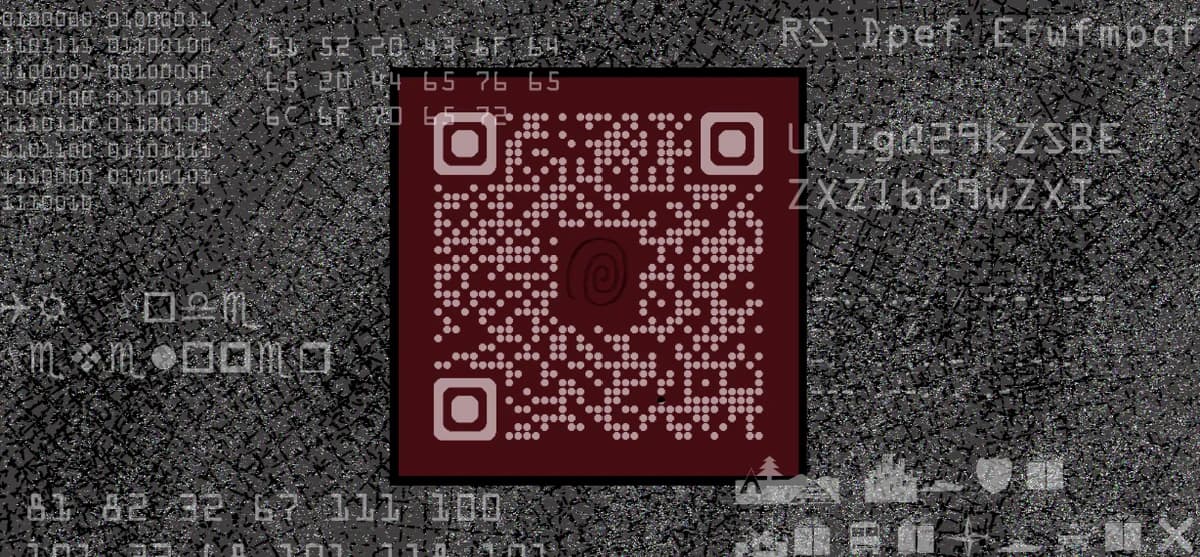
If the answer is yes, then you’ve likely encountered an ARG. And if you choose to follow the clues, solve the puzzles, and scan the codes, then you will be in for an immersive and unforgettable experience, mixing gameplay with storytelling.
In this piece I will go over ARGs, or Alternate Reality Games, as well as provide some of the most popular examples and how you can use QR codes to create your own game. So make sure you look at everything and maybe even have a notepad prepared, because the game starts now!
What is a QR code?
A QR code is a type of image that can be scanned to access the data contained within. They are typically square and made up of smaller black and white squares, though appearances can vary, and can be found on all sorts of things like stickers, fliers, cards, signs, placards, advertisements, and more.
QR codes are highly versatile and can be used to share and access text documents, tracking information, images, educational information, WiFi logins, and even online content like URL links, social media accounts, videos, and group chats.
What is an ARG?
The term ARG stands for Alternate Reality Game, and refers to an interactive or narrative based experience that uses the real world as a platform. Rather than something like a traditional video game, where you’re Mario in the Mushroom Kingdom in a game being played on a Nintendo Switch, you are the star, and the level is the world outside of you.
ARGs make use of multiple platforms and methods of gameplay, which can include real world locations and events, as well as websites, social media platforms, video content, and even other forms of media, like movies and TV shows.
Probably the most popular ARG is Pokemon GO, where players use their phones to catch digital monsters out in the real world.
This type of game can be difficult to describe and understand, so I’ll provide an example:
Let’s say there is a series of videos being published to a Youtube channel, where the narrator is investigating paranormal happenings that occurred years ago while he was working on a student film, uploading the evidence as he finds it.
At the same time, another Youtube channel starts uploading in response to each video, offering up cryptic hints and puzzles to the audience. Also, the narrator of the original channel has created a Twitter/X account to interact with viewers and offer hints to solving the puzzles.
In one of the videos on the second channel, there is a secret message that can be decoded with a cypher provided in a video on the main channel. This code would reveal a link to a private Youtube video, which would reveal more of the story.
When enough players have solved the puzzle and seen the secret video, the story will continue and the loop begins again.
While it seems complicated, this method of storytelling through a game does wonders to engage an audience and build a following. In fact, this example is actually the formula used by the popular 2009 game and web series Marble Hornets.
This series was extremely popular in its day, with the original channel amassing over 700 thousand subscribers, popularizing the Slenderman mythos, and inspiring others to do similar projects, including Everyman HYBRID, Dark Harvest, CH/SS, and NOC + 10. Marble Hornets has also had a resurgence recently with the pseudo sequel series Rosswood.
How can QR codes be used in an ARG?
QR codes are an excellent and easy way to turn just about any piece of media into an ARG, or at least give it ARG elements. Since QR codes can be scanned both in the real world and on a screen, you can put them on a poster, a card, in a painting, or even in another piece of media.
When your players find this code, whether hidden or not, they can easily scan it with their phone and use it to access the content.
The 2021 rerelease of Alan Wake is a prime example of this. Within the world game are three different QR codes. When they are scanned, they take you to a video teasing the at the time upcoming release of Alan Wake 2.
Effectively, you can turn any piece of media into an ARG through the use of hidden QR codes.
It’s also possible to put QR codes out in the real world for players to find. The Dark Night ARG used this tactic at San Diego Comic Con to promote the then upcoming film.
What popular ARGs are out there?
As mentioned above, some popular ARGs that are accompanied by web series are Marble Hornets, Everyman HYBRID, NOC + 10, and Dark Harvest.
These all fall under the horror and paranormal umbrella, which works especially well with the ARG method, as it gives the player the feeling of being the detective or citizen sleuth finding clues to a dark mystery. Welcome Home is a particularly excellent example of this, a game which is still currently ongoing.
But, ARGs can be used in other genres too. Mossflower Pictures in particular differentiates itself by taking place in a more fantasy inspired setting. And of course Pokemon GO is themed around the popular video game and anime franchise.
But a lot of ARGs are also used to promote projects of a larger budget and more widespread appeal. The Dark Night, Dexter, Cloverfield, Gravity falls, and several of the Resident Evil games have all made use of ARG like content as a part of their marketing.
More recently, the animated web series produced by GLITCH, Knights of Guinivere, featured a QR code hidden within its pilot episode, which allowed viewers to see exclusive art relating to the new series.
General tips
Know your audience: If you’re certain that most of your intended audience doesn’t know how to use QR codes or just don’t like them, then don’t use them.
Keep instructions clear: Provide clear instructions on how to use and scan QR codes as well as where the codes will redirect to.
Place codes on a flat surface: To make sure that codes are still scannable, only put them on flat surfaces, like walls, tables, posters, or fliers.
Use high contrast: If using custom colors on a code, make sure that the colors are distinct enough from each other to be read as a QR code.
Make sure codes are visible: Don’t place codes where patrons are unlikely to see them.
Only use codes when necessary: If an alternative exists that’s easier for all parties involved, use that.
Test on multiple devices: Make sure your codes work whether scanned on an Android device, iPhone, tablet, or other device.
Frequently Asked Questions
Q: Do I need to hire someone to make my QR codes?
A: No. QR codes can be made by yourself for free through a service like QR Code Developer.
Q: Do I need to download anything to scan QR codes?
A: While QR scanner apps are available for mobile devices, they are not necessary. Most modern smart devices are perfectly capable of scanning codes right from the built-in camera app.
Q: What devices can scan QR codes?
A: Most modern smart devices with both a built-in camera and an internet connection can scan QR codes and access the content within. This includes smart phones, tablets, and even some handheld gaming consoles.
Q: Are QR codes safe?
A: While there are some risks in using QR codes, they are relatively safe.
Ready to create your QR code?
Generate custom QR codes in seconds - free and easy to use.
Create Free QR Code →