6 Ways QR Codes Can Be Used with Stuffed Toys

Key Takeaways
- QR codes can easily be placed on the tag of a stuffed to or sewn on as a patch
- Codes can link to additional story content, related products, washing instructions, and more
Stuffed toys are often a staple of childhood. Whether you call them stuffies, plushies, stuffed animals, or soft toys, many of us have fond memories of a favorite teddy bear that was made just for them or a soft version of a character they admire.
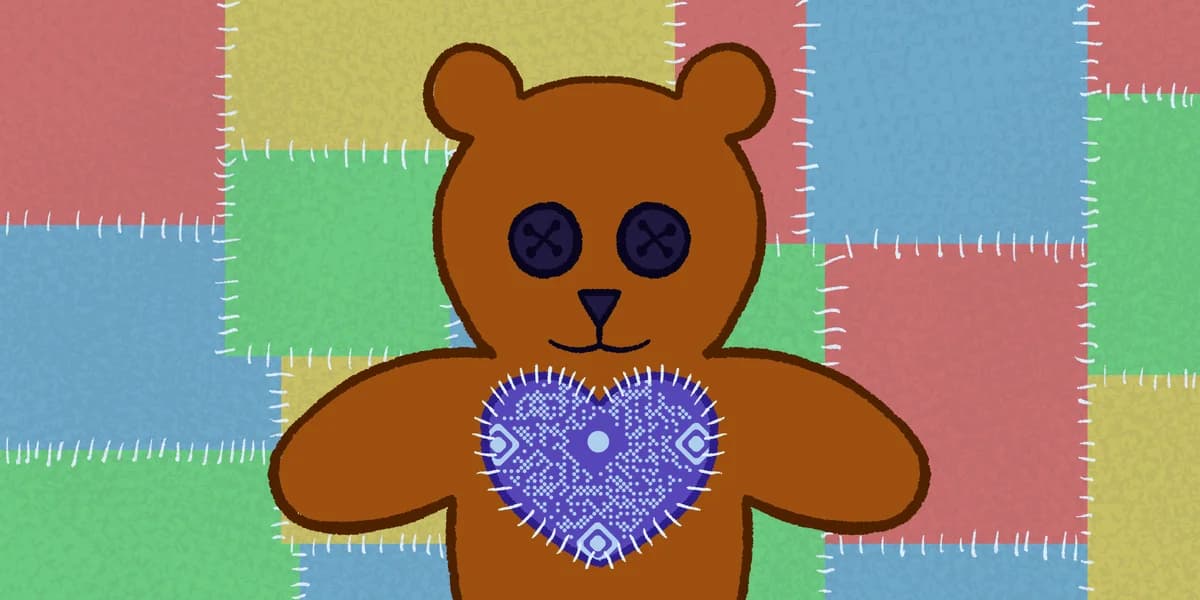
And of course the adult collectors market is worth discussing too. I myself have quite the collection of stuffed toys that I cherish dearly. And I can tell you personally that there’s more to plushies than simply buying them and displaying them on a shelf.
There’s other similar toys and products you may be interested in, social media accounts, story content, and washing instructions to keep up on. All of this can be shared and accessed through our favorite little squares, QR codes!
In this piece I will go over 6 different ways QR codes can and have been used to enhance the stuffy experience, as well as provide the benefits of using them for this purpose.
So let’s dive in!
What is a QR code?
A QR code is an image, usually square and monochromatic, that can be scanned by a smart device, like a phone or tablet, in order to access a variety of online and digital content. This could include website links, social media accounts, images, WiFi logins, and much more.
These codes can be easily made through a service like QR code developer, and can also be customized to fit your needs, monitored, and affixed to just about any surface that can display a simple image. This could be on a poster, a flier, a sticker, or in the case of stuffed toys, a tag, package, embroidered on the toy itself, or even sewn on as a patch.
How can QR codes be used on stuffies?
As stated above, QR codes can be printed on the tags of stuffed animals or sewn directly on the fabric through embroidery or a patch. These codes can be used to share all sorts of information and extra content related to the plush, story, brand, or maker. These can be applied to toys made by both large companies or handmade by independent creators.
Maker website
Perhaps the most common piece of media linked to a QR code on a stuffie would be the official website for the brand, company, or creator of the stuffie. This could be for a well known toy company like Hasbro or Mattel, or for independent creators selling items on Etsy or at craft fairs and conventions.
This can be especially useful to independent makers, as it can be more difficult for fans of their work to find avenues where they can communicate. This can also make it easier for these creators to interact with their fan base, show off more of their work, and even get custom commissions for new stuffies.
For larger companies, the official websites can be used to view other products in the brand and made by the company, as well as order new stock, and learn more about them and their practices.
Storytelling
Many push toys on the market today are more than just fabric and stuffing in the shape of a cute animal. They have backstories and worlds rich with stories and other characters for enthusiasts to explore and kids to expand upon with their imaginations.
A QR code on a plush can help to convey the story easier, allowing audiences to learn more about the characters and the worlds they inhabit, through something like an interactive story book, a series of short videos, or detailed profiles on the characters and world.
This practice can be done for both plushies based on established properties from other forms of media, like Kirby, MegaMan, and Bluey, or brands based on toys and collectables first, like the colorful cast of SanRio characters, including Hello Kitty, Poochico, and the lovable lazy egg, Gudetama.
Social media
Social meda has become an increasingly important part of the toy industry, both for collectors to interact with each other on upcoming products and children to get excited and start filling their Christmas lists.
A QR code on a plush can make it far easier to engage with these accounts, whether it be on Facebook, Twitter/X, Instagram, Youtube, TikTok, or whatever other social media account you’re most active on.
As stated in the previous section, this can be especially useful for independent makers to better communicate with fans, potential customers, and collaborators.
Collectability
Mystery and collectability has become a major factor in the plushie market recently, with blind box pendant plushies like Labubu proving to be especially popular. But keeping up with what plushies you have and which ones are coming out can be a struggle.
Luckily, a QR code on the packaging can help collectors both keep track of their own collections as well as learn about new lines or products coming out and how to acquire them.
Connected apps
Some stuffed toys do much more than just sit on a shelf and look cute. They could have an app you can connect to to play mini games, learn more about the character, or even interact with them if they have electronic components built in. This app can be easily accessed and downloaded onto a device by scanning a QR code on the packaging or the push itself.
Furby and Teddy Ruxpin are prime examples of this practice, with the former using an app to feed, take care of, and communicate with the toy itself, and the latter using a connected app to download and read new stories for young audiences.
Washing and maintenance instructions
Washing instructions can, and often are, printed on a stuffie’s tag or packaging, but there’s only so much space to use there. A QR code can provide much more detailed cleaning and maintenance instructions and even provide video examples on how to best care for your plushies.
I can tell you personally that this is very important, as stuffed toys are just about guaranteed to get dusty or dirty. I have to clean one of my favorite MegaMans every couple of months, and I take pretty good care of it. The thing is just a dirt magnet.
Benefits of using QR codes on stuffies
Ease of use
QR codes are both easy to use and easy to make through something like QR Code Developer. Just about every smart phone on the market has a QR code scanner built right in. All you need to do is point the camera at the code and tap the link when it pops up.
QR codes can also be scanned from almost any angle and even when visible damage has been done to the code.
Widely understood
By now, most people with smart phones are at least familiar with QR codes and know how to use them. In many regions, QR code payment is more popular than cash or cards.
Customizable
QR codes can be heavily customized, with unique colors and appearances to fit your needs or branding.
Hands free communication
The usage of QR codes surged during the COVID 19 pandemic since it allowed for people to communicate with each other, access content, and share resources, all without needing to touch each other or even be in the same space.
Trackable
If you use something like QR Code Developer to make your codes, then it’s possible to monitor how your codes are used. This can include information like how many scans your code got, where they were scanned, and even on what device they were scanned.
General tips for making your own codes
Know your audience: If you’re certain that most of your intended audience doesn’t know how to use QR codes or just don’t like them, then don’t use them.
Keep instructions clear: Provide clear instructions on how to use and scan QR codes as well as where the codes will redirect to.
Place codes on a flat surface: To make sure that codes are still scannable, only put them on flat surfaces, like walls, tables, posters, or fliers.
Use high contrast: If using custom colors on a code, make sure that the colors are distinct enough from each other to be read as a QR code.
Make sure codes are visible: Don’t place codes where patrons are unlikely to see them.
Only use codes when necessary: If an alternative exists that’s easier for all parties involved, use that.
Test on multiple devices: Make sure your codes work whether scanned on an Android device, iPhone, tablet, or other device.
Frequently Asked Questions
Q: Can QR codes be placed on plushies and stuffed toys?
A: Yes. QR codes can be printed onto a stuffed toy’s tag or packaging or even sewn on as a patch or embroidery.
Q: How are QR codes used on stuffed toys?
A: QR codes can be used on stuffed toys to provide things like links to official websites, social media accounts, story content, maintenance instructions, and more.
Q: Do I need to hire someone to make my QR codes?
A: No. QR codes can be made by yourself for free through a service like QR Code Developer.
Q: Do I need to download anything to scan QR codes?
A: While QR scanner apps are available for mobile devices, they are not necessary. Most modern smart devices are perfectly capable of scanning codes right from the built-in camera app.
Q: What devices can scan QR codes?
A: Most modern smart devices with both a built-in camera and an internet connection can scan QR codes and access the content within. This includes smart phones, tablets, and even some handheld gaming consoles.
Q: Are QR codes safe?
A: While there are some risks in using QR codes, they are relatively safe.
Ready to create your QR code?
Generate custom QR codes in seconds - free and easy to use.
Create Free QR Code →