qr codes in indonesia

Small merchants and travelers across Indonesia rely on a single scannable code to settle a bill, split a tab, or verify a menu item, cutting cash handling and checkout friction at every stall.
Key Takeaways
- QRIS unifies dozens of Indonesian e-wallets and bank apps into one scannable code, removing the need for merchants to display separate stickers for each payment provider.
- Small and micro merchants, not large retailers, drove most of the early QRIS growth because a printed code is far cheaper than a card terminal.
- Static QRIS stickers left unattended can be swapped by scammers, similar to the risks outlined in our guide to checking if a QR code is safe, so merchants should inspect their printed code regularly and consider laminated or tamper-evident placements.
Ask any warung owner in Jakarta how they take payment and the answer is almost always the same: QR codes! Indonesia didn't just adopt QR payments as a quick trend — it built a national standard around them. Bank Indonesia's QRIS (Quick Response Code Indonesian Standard) unifies dozens of e-wallets and banking apps under one scannable code, so a single sticker at a fruit stand can accept GoPay, OVO, Dana, and a dozen bank apps without the merchant juggling separate terminals.
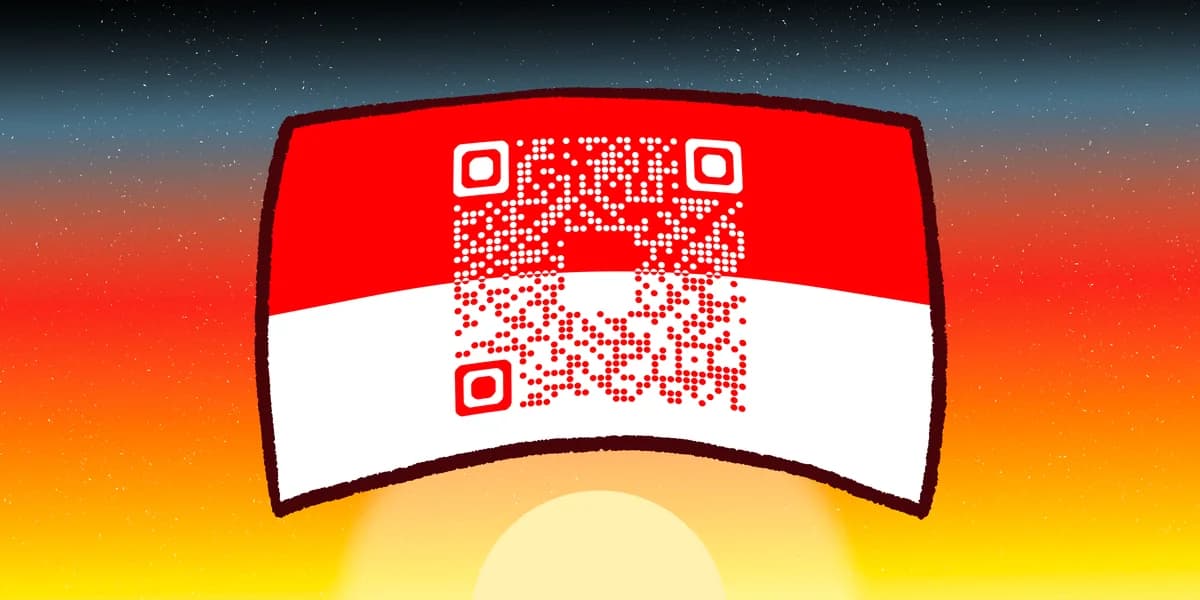
That standardization matters because Indonesia's retail landscape is dominated by small and mid-size sellers, not big chains with point-of-sale hardware budgets. A QR sticker costs almost nothing to print and requires no card reader, which is exactly why adoption spread from big-city cafes to rural markets in a few short years.
How QR codes work in Indonesia
Transaction volume tells the story better than any marketing pitch. QRIS usage jumped from roughly 993 million transactions worth Rp98.4 trillion in 2022 to 1.6 billion transactions in the first ten months of 2023 alone, with full-year value reaching Rp229.96 trillion, according to Castle Asia. That kind of growth curve doesn't happen because a government mandates it — it happens because sellers found it genuinely faster than counting change.
The user base backs this up. By July 2023, QRIS had 38.24 million registered users, and 72 percent of them — about 27.51 million — were micro, small, and medium enterprises, according to The Jakarta Post. That skew toward MSMEs explains why you'll spot QRIS stickers on motorbike parking attendants, street noodle carts, and neighborhood laundromats just as often as on shopping mall storefronts, a pattern worth comparing against broader QR code adoption facts by country.
Payments are the anchor use case
Unlike many markets where QR codes are mostly a marketing gimmick, Indonesia's core use case is money movement. A single QRIS code links to a merchant's registered bank or e-wallet account, and the scanning app pulls the correct payment rail automatically. Tourists sometimes struggle here because QRIS acceptance from foreign wallets is limited, so carrying a local SIM or e-wallet account still helps for daily purchases.
Tourism and hospitality followed close behind
Hotels, tour operators, and even some temple sites now print QR codes for check-in forms, digital brochures, and ticket verification. If you're setting up a homestay or short-term rental in Bali or Yogyakarta, the same logic used in check-in QR code guides for Airbnb and hotels applies directly — guests scan once at arrival and skip a paper registration form entirely.
Menus and small business marketing caught on quickly
Warungs, cafes, and food stalls that once relied on laminated paper menus have shifted many items to scannable digital menus, following the same pattern covered in our QR code menu guide. It keeps prices updateable without a reprint and lets sellers swap seasonal items in minutes.
Tips for using QR codes in Indonesia
Whether you're a business owner setting up your first QRIS sticker or a visitor trying to make sense of the local scanning habits, these pointers will save you some confusion.
Register for QRIS through a licensed Indonesian payment provider before printing anything using a free QR code generator — a code generated outside the national standard won't work with local e-wallets.
Laminate or frame your printed QRIS sticker at the point of sale so it's harder for someone to paste a replacement code over the original without notice.
Pair your QRIS payment sticker with a second code linking to your menu or product catalog, keeping the two clearly labeled so customers don't scan the wrong one at checkout.
Test your code with at least two different e-wallet apps after printing, since font size and contrast on cheap thermal printers can sometimes blur the modules enough to fail a scan.
Frequently Asked Questions
What is QRIS and how is it different from a regular QR code?
QRIS is Indonesia's national QR payment standard, set by Bank Indonesia, that lets one printed code accept payments from any participating e-wallet or bank app. A regular QR code you generate yourself can link to a website, menu, or contact card, but it won't process a payment unless it's issued through a registered QRIS provider.
Can foreign visitors use QRIS while traveling in Indonesia?
Some international e-wallets have started limited QRIS interoperability, but coverage is still inconsistent. Most travelers find it easier to get a local e-wallet account or carry cash as a backup for smaller vendors that only accept domestic QRIS scans.
Are QR code payment scams common in Indonesia?
Sticker-swapping scams, where a fraudulent code is pasted over a merchant's legitimate QRIS sticker, have been reported in several cities. Merchants can reduce risk by checking their printed code regularly and reviewing the general guidance in our QR code safety guide.
Do small businesses need special software to create a QRIS code?
Yes — a QRIS-compliant payment code has to come from a licensed payment service provider or bank, not a generic QR generator. For everything else, like menus, contact cards, or promotional links, a standard tool such as the free QR code generator works fine.
How has QR code use in Indonesia compared with other Asian markets?
Indonesia's growth pattern echoes what happened in China, where QR-based mobile payments became the norm well before contactless cards did. Our QR code usage in China article breaks down that earlier shift, and our QR code facts by country page compares adoption trends across several markets.
Related Guides
Ready to create your QR code?
Generate custom QR codes in seconds - free and easy to use.
Create Free QR Code →