qr code with drones

Sky-sized QR displays pull thousands of eyes toward a single scan action, turning a nighttime spectacle into a direct line from crowd attention to app downloads, ticket sales, or landing pages.
Key Takeaways
- Drone QR codes are built from a grid of individual drones, each acting as a single light-up pixel in the code pattern.
- Real-world examples include a 1,500-drone Shanghai display for a game launch and a record-setting 3,281-drone formation.
- Viewing angle, drone count, and code complexity all affect whether phones can actually scan the sky-based code.
- A common mistake is choosing a URL that's too long, which forces a denser, harder-to-scan pattern at altitude.
A Chinese gaming company called Bilibili flew 1,500 drones over Shanghai to form a scannable QR code in the night sky, sending viewers straight to a mobile game download page, according to IGN. A year later, automotive company Genesis set a Guinness World Record with 3,281 drones airborne at once, forming a QR code among other shapes, as reported by QR Code Tiger.
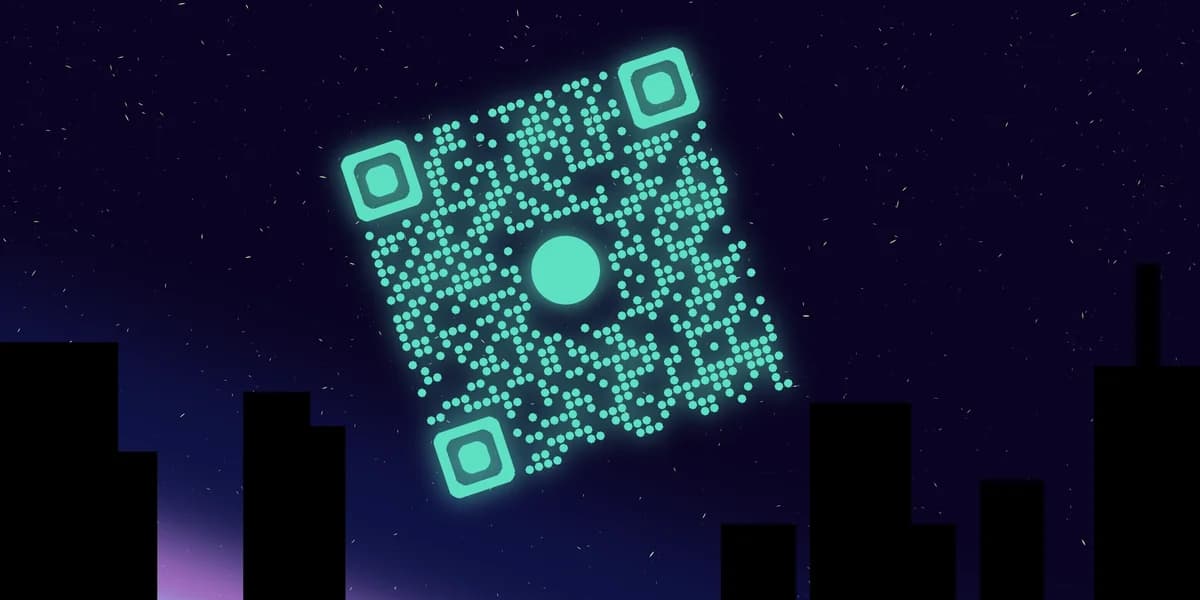
A drone QR code works exactly like a printed one, just built from hundreds or thousands of individually lit drones instead of black-and-white pixels. Each drone acts as one pixel or module in the code's grid, hovering at a fixed position with an LED light that turns on or off to match the code's pattern. Viewed from the ground at the right angle and distance, the formation reads as a functional QR code that any phone camera can scan.
But this isn't a mere novelty limited to massive tech companies. Drone light show operators increasingly offer QR formations as a add-on package for product launches, stadium halftime shows, festivals, and city tourism campaigns. The appeal is obvious: a code hanging in the sky over a crowd of thousands generates more curiosity and photo-sharing than a code on a poster ever could.
How to build a drone QR code campaign
Getting a QR code airborne takes more coordination than a typical marketing rollout since you're combining flight choreography, lighting, and code generation into one live event. Here's the general process most drone show producers follow.
Step 1: Generate a short, low-complexity QR code
Start with a short destination URL rather than a long one. Every extra character adds more modules to the QR grid, and more modules mean more drones and finer positioning, which raises both cost and error risk. Use a tool like the free QR code generator to test how compact you can make the link, then shorten it further with a redirect service if needed. Aim for the lowest error-correction level that still keeps the code readable, since drone formations already introduce visual noise from wind and light bleed.
Step 2: Choose a dynamic QR code, not a static one
A static code locks its destination the moment it's created, which is risky when the show happens once and can't be edited afterward. A dynamic code lets you swap the landing page after the event without changing the visual pattern, so if your promotion or app link changes, the code in the sky still works. Read more on the difference in this guide to static vs dynamic QR codes before locking in your campaign.
Step 3: Work with a drone show operator on module mapping
Send your generated QR code's exact pixel grid to the drone operator so their flight software can map each module to a drone position and light state. Operators typically request the code in its simplest black-and-white export, not a styled or logo-embedded version, since decorative elements don't translate well to sparse drone spacing, unlike the more forgiving customization options covered in these QR code design tips.
Step 4: Plan the viewing zone and scan distance
Phones need enough resolution to read the code, which means the audience has to stand within a tested distance range and roughly straight-on to the formation. Work with the operator to mark a viewing zone on the ground, and consider adding signage or announcer prompts telling people exactly where to stand and when to scan, similar to how event organizers position event QR codes at eye level for easy scanning.
Step 5: Test the code before showtime
Run a full rehearsal flight if possible, or at minimum test a printed mock-up of the drone grid pattern from the expected audience distance using several phone models. Scanning behavior varies by camera and lighting condition, so confirm the code reads correctly in the dark against a night sky background before committing to the live show.
Tips for making a drone QR code scannable
A few practical adjustments make the difference between a code that photographs well and one that actually converts scans in the moment.
Keep the destination URL under 25 characters where possible to reduce the number of drones needed for a clean grid.
Brief your audience beforehand with a countdown or verbal cue so phones are ready and steady when the formation locks into place.
Build in a static hold time of at least 8-10 seconds, since drone formations that shift too quickly won't give cameras time to focus and scan.
Pair the drone display with a backup printed or projected version of the same code for anyone too far back to scan the sky version.
Frequently Asked Questions
How many drones does it take to form a scannable QR code?
It depends on the code's complexity and the version of QR code used, but past examples range from 1,500 drones for a game launch in Shanghai to over 3,000 drones in a record-setting show. Simpler, shorter URLs generally need fewer drones to render a legible grid.
Can any phone camera scan a QR code made of drones?
Yes, as long as the code is generated correctly and the viewer is within an appropriate distance and angle. The scanning mechanics are identical to a printed code; the challenge is entirely about visibility and formation stability rather than the phone's software.
Is a drone QR code static or dynamic?
Most campaigns should use a dynamic QR code so the destination link can be updated after the show without needing to refly the pattern. Learn the tradeoffs in this static vs dynamic QR code guide.
What kind of events use drone QR codes?
Product launches, festivals, sports halftime shows, tourism campaigns, and gaming promotions have all used the format, following the model set by Bilibili's Shanghai display. Any event with a large outdoor crowd and a night sky backdrop is a candidate.
Is a drone QR code more effective than a printed one?
It's more attention-grabbing and shareable on social media, but it's a one-time event rather than a permanent placement. For everyday marketing, printed codes on flyers or stickers remain more practical and far cheaper.
Related Guides
Ready to create your QR code?
Generate custom QR codes in seconds - free and easy to use.
Create Free QR Code →