louis vuitton qr code

Authentication codes on luxury goods link a physical item to a digital record, letting owners confirm origin, materials, and history in seconds instead of guessing from packaging alone.
Key Takeaways
- A genuine Louis Vuitton QR code links to a controlled verification page or blockchain record, not a generic landing page or social profile.
- The luxury counterfeit market is enormous — global losses in this category top $509 billion annually, which is exactly why brands invested in scannable authentication instead of relying on visual inspection alone, a broader shift explored in our overview of understanding QR codes.
- Scanning the code is only step one — the destination it opens matters far more than the presence of a code on the item itself.
Why would a leather goods maker bother stitching a tiny square code into a coat lining or tucking one inside a shoe box? The answer is simple, counterfeiters have gotten good enough at copying stitching, hardware, and logos that a visual check is no longer enough on its own.
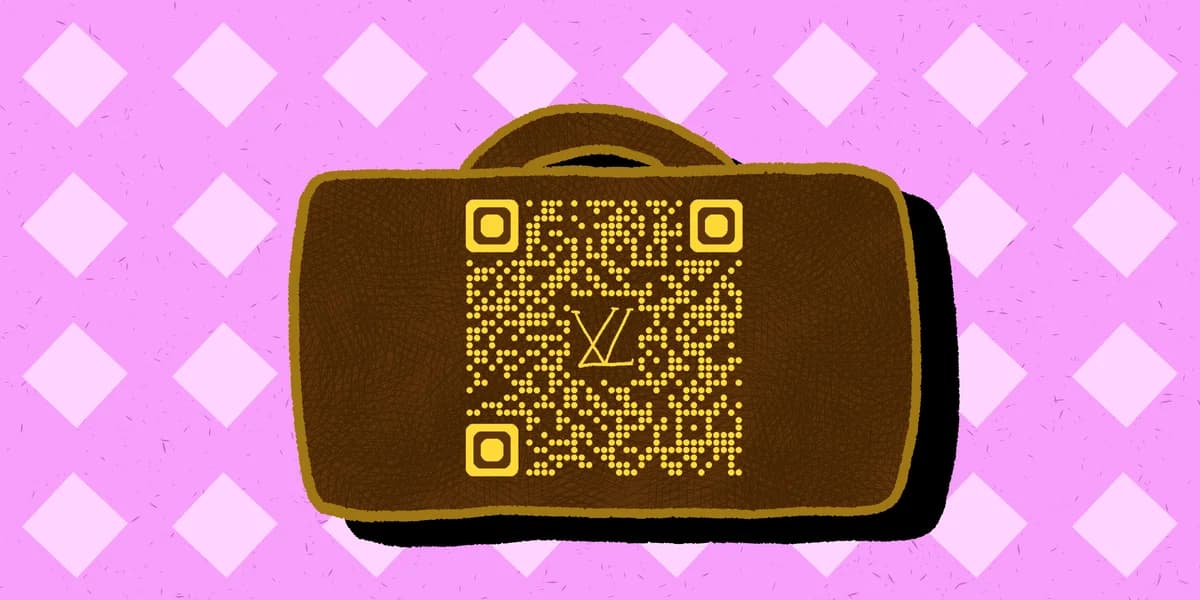
Louis Vuitton, along with parent company LVMH, has been rolling out digital product identifiers on select items — small QR codes that link to a verification page or, in some cases, to a blockchain-backed record of the item's origin and production details. This isn't the same as the older date-stamp system stitched into older bags. It's a newer layer built for the resale and authentication era, one of several types of QR codes now used for real-world verification, where a code on a physical product opens a page confirming the item is genuine.
The scale of this effort matters. LVMH co-founded the Aura Blockchain Consortium with Prada and Richemont, and by late 2024 that network had verified more than 50 million luxury items accessible via QR scan. That's not a pilot program anymore — it's infrastructure.
How to scan and check a Louis Vuitton QR code
Should you trust a QR code just because it's sitting on a Louis Vuitton item? Not automatically. Here's a practical walkthrough for checking one properly, whether you're inspecting a new purchase, a gift, or a resale listing.
Step 1: Locate the code and note where it's placed
Authentication codes typically sit on an interior tag, inside a dust bag insert, or on a hang tag attached at purchase — not printed loosely on a receipt or slip of paper. If the code is on a sticker that looks easy to peel off and reattach, treat that as a warning sign rather than proof of authenticity.
Step 2: Scan with your phone's native camera
Open your phone's camera app and point it at the code rather than downloading a random third-party scanner app — using one of the most secure QR code scanners is a smarter approach if you want extra protection. Most modern iPhones and Android devices recognize QR codes natively and show a link preview before you tap through, which gives you a chance to check the domain before opening anything.
Step 3: Check the destination domain carefully
A legitimate code should route to a Louis Vuitton or LVMH-controlled domain, or to the Aura platform tied to the consortium. If the link redirects through a shortened URL, an unrelated domain, or immediately prompts a login or payment request, stop and don't enter any personal information — this pattern is a hallmark of quishing attacks.
Step 4: Compare the verification details against the physical item
Once the page loads, it should reference details specific to that item — model name, production batch, or material — that you can cross-check against the physical piece. A page that only shows a generic "authentic" badge with no item-specific data isn't doing much verifying at all.
Step 5: If in doubt, verify through an official channel
When a code seems off, contact the retailer or Louis Vuitton client services directly rather than relying solely on the scan result. This second check matters most for secondhand or resale purchases where the seller controls the item's history and the tag itself.
Tips for spotting a fake or bad code
A code on the box doesn't guarantee anything by itself. These checks focus on the details counterfeiters usually get wrong.
Look for print quality on the code itself — legitimate tags use consistent, sharp printing, while counterfeit codes are often slightly blurry or printed at an odd angle.
Be suspicious of any authentication code that requests an email address, password, or payment before showing verification results — genuine brand verification pages don't gate basic authenticity info behind a login, a distinction covered in our guide on checking if a QR code is safe.
Cross-reference the serial or date code referenced on the linked page with the physical stitching or stamp inside the item, since a mismatch between the two is a stronger red flag than the code's appearance alone.
Treat marketplace listings that show only a photo of a QR code (rather than letting you scan the physical item) with extra caution, since a photographed code proves nothing about the actual product in hand.
Frequently Asked Questions
Does every Louis Vuitton item have a QR code?
No. Digital authentication codes have been rolled out on select product lines and newer releases, not retrofitted across the entire back catalog. Older items may rely on traditional date codes stamped into the leather instead.
Can I trust a QR code I found on a resale listing photo?
Be cautious. A photographed code tells you nothing about whether that specific physical item matches the code, and it's easy for a seller to photograph a code from an unrelated genuine item. Ask to scan the code on the actual product before buying.
What's the difference between this and the old date code system?
Date codes are alphanumeric stamps that indicate manufacturing location and period; they require lookup tables and don't confirm authenticity on their own. QR-based systems link directly to a verification page or blockchain record, giving a faster and more specific check.
Is scanning a luxury brand's QR code safe?
Scanning itself is safe if you use your phone's built-in camera and inspect the link preview before tapping through. The risk comes from what happens after — entering personal details on an unverified page is where problems start. For a broader safety check, see our guide on checking if a QR code is safe.
Can small businesses build something similar to Aura's verification system?
Yes, at a smaller scale. Any business can generate a QR code linking to a product page, care instructions, or a landing page confirming authenticity using a tool like the free QR code generator, then update that destination over time without reprinting labels.
Related Guides
Ready to create your QR code?
Generate custom QR codes in seconds - free and easy to use.
Create Free QR Code →